Done badly — a dirty sponge, one bucket, a gas station brush — it is the single largest source of swirl marks on daily-driven cars. Most of the swirl damage we correct was installed during washing, not by anything the road did.
How we wash
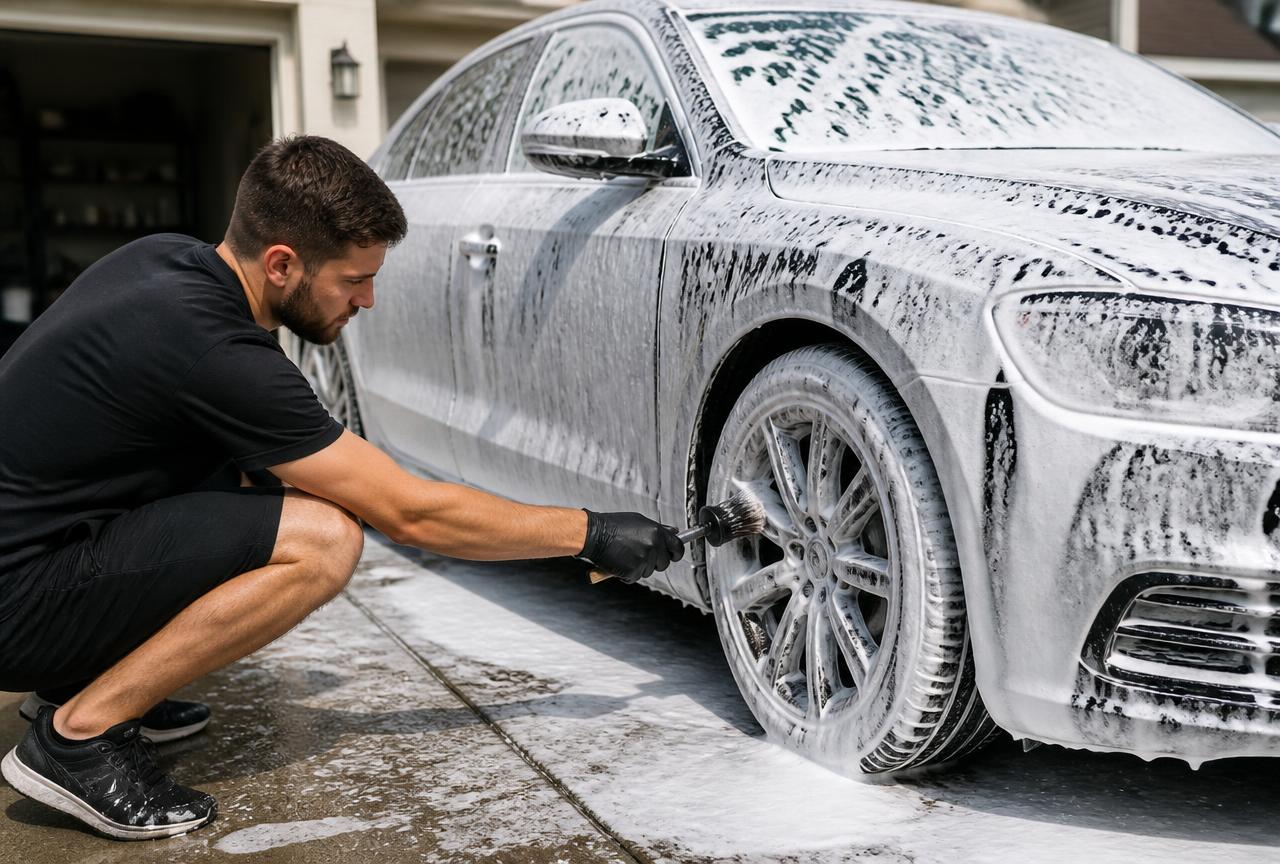
- Wheels and tires first, with dedicated tools that never touch paint
- Thorough pre-rinse, then a foam soak to lift dust before contact
- Two-bucket method with grit guards and clean wash media
- Panel-by-panel washing with frequent rinsing, top down
- Careful drying with clean towels and filtered air to avoid water spots
- Door jambs wiped, glass cleaned, tires dressed
Why the drying step matters here
Sacramento water is hard, and hot paint evaporates water fast. If a panel air-dries in the sun, minerals stay behind as water spots — and repeated spotting eventually etches. Careful drying is not fussiness, it is the difference between a clean car and a car that needs water spot removal in six months.
How often
Every two weeks is a good rhythm for a vehicle parked outside, especially under trees. During peak pollen weeks in spring and after the first rain of the season, more frequent washing prevents the worst of the bonded contamination. Coated vehicles wash faster and can often stretch to monthly.
Frequently asked questions
Do you offer a waterless or rinseless wash?
Yes, when the property does not allow runoff or the vehicle is only lightly dusty. We choose the method based on how soiled the car is — a heavily dirty car should not get a waterless wash.
Do you wash in apartment parking lots?
Regularly. We keep the footprint tight and manage water responsibly; some properties have their own rules, so check with management.
Is a wash and wax better value?
If it has been a while since the paint had protection, yes — the wax step is what keeps the next few washes easier.
Keep exploring
Related services
Vehicles we detail
Service areas
Helpful guides